Holi Special Discount On OUR COURSES - CAT 2025 (FLAT 50%OFF), IPMAT 2026 (FLAT 50%OFF)
Menu
Choose CL-LST, be a topper in CLAT, AILET, and more!
What is the Common Law Admission Test (CLAT)?
A national entrance exam known as the Common Law Admission Test (CLAT) is required for enrolment in the undergraduate and graduate law programs provided by numerous universities all over India. It is conducted by the Consortium of National Law Universities (NLUs) rotationally. The exam tests a candidate’s aptitude and skills in various areas such as English, Mathematics, Logical Reasoning, Legal Reasoning, and General Knowledge.
CLAT 2024: Exam Pattern
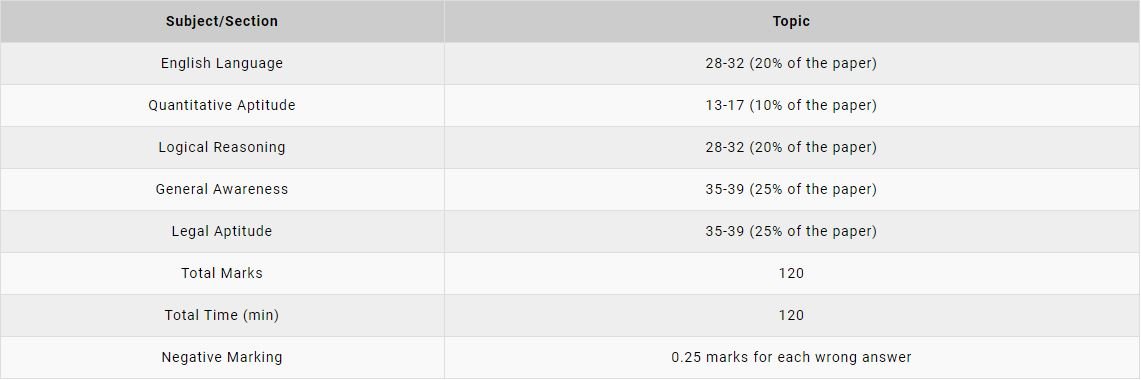
Once the CLAT exam pattern basic structure is clear, take a look at the five sections that comprise CLAT. These sections test one’s aptitude and reasoning abilities, and hence, require months of preparation and practice.
Each question carries 1 mark and for every incorrect attempt, 0.25 marks will be deducted.
CLAT 2024: Eligibility Criteria
The eligibility criteria for are primarily based on two factors:
Educational Qualification
Age Limit
CLAT 2024 Educational Qualification
Any candidate who has completed the 10+2 or equivalent examination is eligible to apply for CLAT 2024 test.
The minimum marks required for different categories are listed below:
45% marks for General/ Other Backward Class (OBC)/ Specially abled person categories
40% marks for Scheduled Class (SC)/ Scheduled Tribe (ST) categories
Note: Candidates appearing for their Class 12th examination in March/ April 2024 are also eligible for the test. Such candidates need to give evidence of passing their Class 12th exam at the time of admission. Candidates who fail to fulfill this will lose their right to admission through the CLAT exam.
CLAT 2024 Age Limit
There is no upper age limit to apply for the exam.
CLAT 2024: Syllabus
The test is conducted in offline mode where the paper has 150 questions from five different sections. Below is an elaboration of the scope and coverage of CLAT exam syllabus under every section.
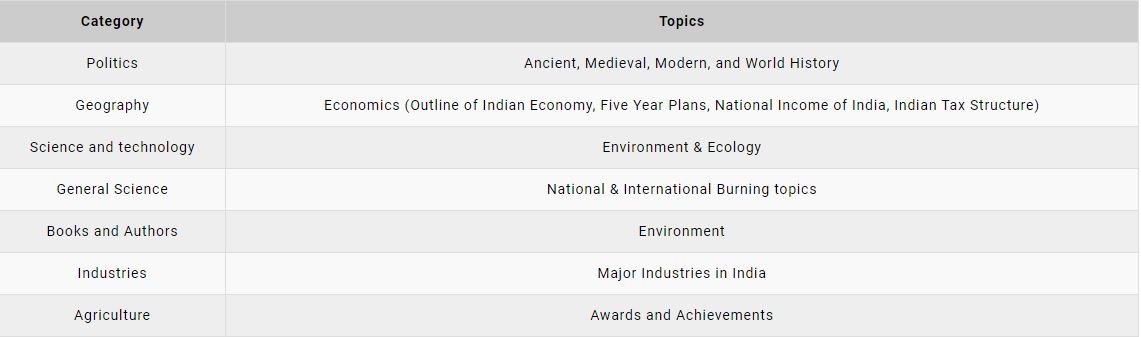
Current Affairs including General Knowledge
This section would again consist of passages instead of direct questions that were asked earlier. The passages would again be 450 words each and the same would be derived from news, journals, etc. Questions based on such passages would be asked. Such a question can cover the static portion as well, candidates are therefore advised not to forgo the static portion entirely. Reading Newspapers daily, specifically, articles containing any bills Judgments or legal information should help in preparing for this section.
Legal Reasoning
Legal reasoning for CLAT will test the candidate’s interest in the study of law, research aptitude, and problem-solving ability. Questions would again be based on passages relating to facts or scenarios involving legal matters. The passage would contain certain rules and principles which should be identified and accordingly applied to the questions. The passages would be approximately 450 words each.
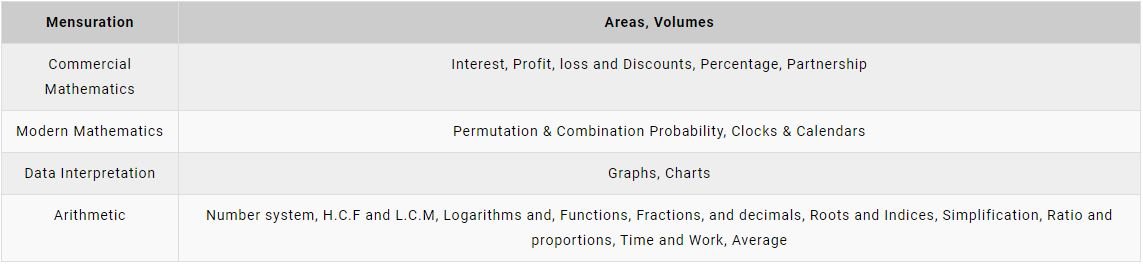
Quantitative Aptitude
The Quantitative Technique or Maths section will include short sets of facts or propositions, graphs, or other textual, pictorial, or diagrammatic representations of numerical information, followed by a series of questions. The questions will be in the form of Data Interpretation i.e. candidates would be required to infer information from the given passage and answer accordingly.
Logical Reasoning
The purpose of the logical reasoning section is to test the candidate’s ability to identify patterns, and logical links, and rectify illogical arguments. The questions would be based on the passage of 300 words.
English
The English section will test the candidates’ proficiency in English based on comprehension passages. Students will be given passages of about 450 words each and such passages could be fiction/ non-fiction, contemporary/historical, etc. Candidates will be questioned on their understanding of the passage and its central theme, meanings of words used therein, etc. The inference would be key here, candidates will have to comprehend the main idea discussed in the passage including any counter-arguments used in the passage.
Why choose CL-LST?
CLAT coaching is a crucial step to take if securing a seat in one of the top law colleges in India is your dream. If anything, one of the transparent benefits of taking up CLAT coaching is the success of the students. The other benefits of taking up CLAT Coaching include
Focussed Preparation
CLAT Coaching helps in thoroughly understanding the topics that are sometimes hard to penetrate on your own- this helps the students overcome any surprise challenges, and appear victorious.
Dedicated Doubt Sessions
With CLAT Coaching, all your syllabus-related and exam-related doubts are nursed by the teachers. It enables the students to prepare better with an eased and relaxed mind.
Comprehensive Study Material
CLAT study materials are meticulously curated to give the students the best of the best. It covers the basics and the advanced topics by subject experts.
Disciplined Approach
The rhythmic discipline of the CLAT coaching classes lays down the norm of dedicating a certain number of hours every day through classes and preparation time for the class.
Self-Analysis & Peer-Learning
Classroom competition enables the discovery of the level of competition up to a certain extent. It also helps in revealing both the improvement areas and strong areas of the student.
Test Series
The test series provided are set in accordance with the pattern and difficulty level of the real exam. This is done to train and give the students the feeling closest to the CLAT paper.